· 5 min read
Which snake is biting you? The ten snakes of the Leela board
Envy, jealousy, egotism, darkness: the ten snakes of Leela, where each one drops you, and a question to ask yourself before the next bite.
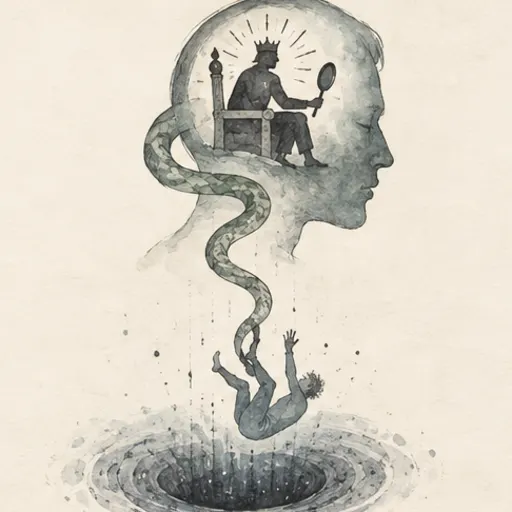
In the children’s version of the game, a snake is just bad luck. You roll, you slide, you sulk. On the Leela board, the old Indian game of self-knowledge, a snake is something more specific: a named state of mind with a head and a tail. The head sits on one cell, the tail on another, and the line between them is a claim about how people actually go wrong.
There are ten snakes on the board. None of them is random. Each one starts from a state you probably recognise and ends somewhere that, on reflection, makes uncomfortable sense. Below is the full list, read not as a diagnosis but as ten questions. You do not have to answer all of them. One honest answer is plenty.
The snakes of desire
The first three snakes live low on the board, among the rows of desire and action. They are the ones most of us meet on an ordinary Tuesday.
 12 · Envy
 8 · Avarice
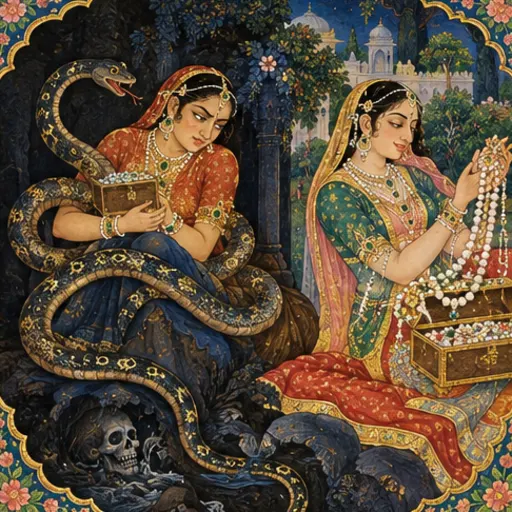
Envy (12) to Avarice (8). Envy is comparison: someone else’s success feels like your own lack. The snake drops you to Avarice, where another person’s good fortune feels like a loss. The slide is short but real. Envy turns into wanting what they have, and suddenly your own life seems thin.
Ask: Whom do I envy, and what desire of my own is that envy really pointing to?
Jealousy (16) to Greed (4). Dvesha is the fear of losing what you consider yours, and hostility toward whoever might take it. The snake lands on Greed, the fear of not having enough. Fear of loss becomes the urge to hold on and hoard.
Ask: What am I afraid of losing, and does it really belong to me?
Bad Company (24) to Conceit (7). The surroundings, people and habits that support the worst in you. Surroundings that prize appearances bring you back to self-admiration. This one is refreshingly practical: it suggests that some of your character lives in your calendar.
Ask: Which surroundings make me worse than I can be?
The snakes of living against yourself
Irreligiosity (29) to Delusion (6). Adharma does not mean a lack of faith. It means acting against your own nature and conscience. The snake drops you to cell 6, Moha, the very square where every game begins. Going against yourself returns you to the original attachment, as if you had never started.
Ask: Where am I acting against what I believe is right?
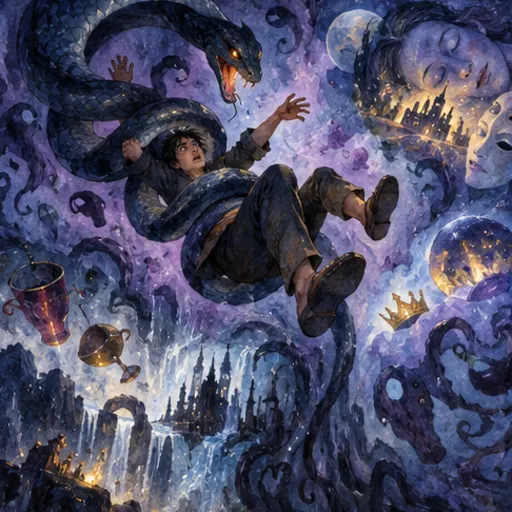
Ignorance (44) to the Sensual Plane (9). Avidya is not a lack of knowledge. It is not knowing that you do not know: a certainty that cannot see its own edges. Without understanding yourself, you follow desires again without seeing where they lead.
Ask: What am I so sure of that it never even occurs to me to check?
Violence (52) to Purgatory (35). Force turned against life, in words, deeds or thoughts, toward others or toward yourself. The tail lands in Purgatory, which on this board is not punishment but the place where the consequences of past deeds become visible and burn away.
Ask: Where does my strength wound, others or me?
The snakes near the top
Here is the part of the board that surprises people. The seventh row, very high up, has three snakes. The eighth row has one more. The message is not subtle: nobody climbs out of reach.
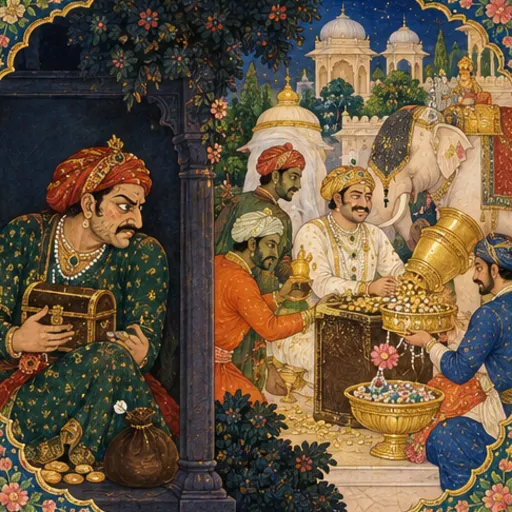
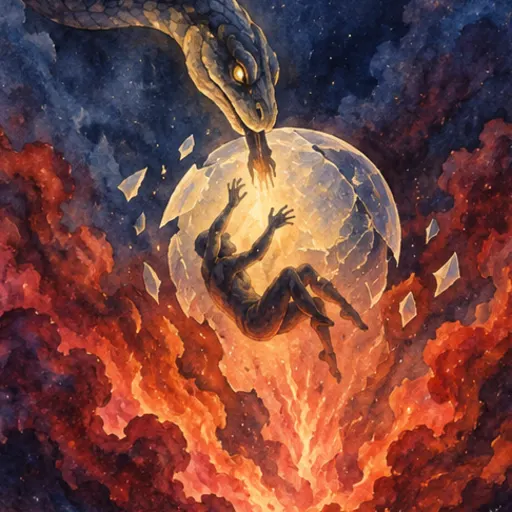
Egotism (55) to Anger (3). Ahamkara is the “I” as separateness. You need an ego to act, but it easily starts to see itself as the centre of everything. Then any disagreement from the world feels like a threat, and you land in Anger, on the first row. It is a long fall, and a familiar one.
Ask: Where is my “I” demanding too much room right now?
 55 · Egotism
 3 · Anger
Negative Intellect (61) to Nullity (13). Durbuddhi is a mind in service of the ego: inventive with excuses, suspicious, able to devalue everything. A mind working against itself leaves you in Nullity, the state of “I am no one, and nothing matters.” Clever people know this snake very well.
Ask: What reasons do I find for not doing what I believe matters?
Darkness (63) to Illusion (2). Tamas is dullness, heaviness of consciousness. This snake is the longest fall in the seventh row and returns you almost to the start, to the habit of taking what you see for all there is.
Ask: Where do I stop noticing that I am sleepwalking?
Inertia (72) to Earth (51). The last cell of the board. Tamo-guna is heaviness and resistance, the pull toward rest. Even from the very top, inertia brings you back to the ground. It is the gentlest snake in its way: you land on Earth, an image of patience, and the path begins again.
Ask: Where is inertia holding me, and what would help me move?
What the snakes are not
It is tempting to read this list as a catalogue of sins. That would miss the point of the board. The snakes are not punishments handed out by a stern designer. They are descriptions. They say: this state tends to lead to that one. You can test each claim against your own experience, and sometimes you will disagree.
A few things are worth noticing:
- The head names the trigger, the tail names the result. Egotism does not look like anger at first. It becomes anger. Envy does not feel like greed. It becomes greed.
- Height does not protect you. Four of the ten snakes start in the top two rows.
- Falling is part of the game. In Leela you cannot reach the goal without passing through the lower rows, and most real games include at least one long slide. The board expects it.
A snake is not a verdict. It is a map of a habit.
A small exercise
Read the ten questions again and pick the one that made you wince. That is probably your snake for this week. Write it on a card. When you notice the head of it (the comparison, the clever excuse, the heavy evening on the sofa) just name it quietly: there it is. Naming a snake does not remove it, but it makes the slide feel less like fate and more like a choice you can start to see coming.
Roll the die
Set an intention, throw a six to be born, and let the AI guide ask you one question on every cell you land on, all the way to cell 68, Cosmic Consciousness.